Azure Virtual Desktop, RAG and AI Foundry
Metro Toronto Azure Community · October 9, 2025 · Microsoft Canada HQ, Toronto
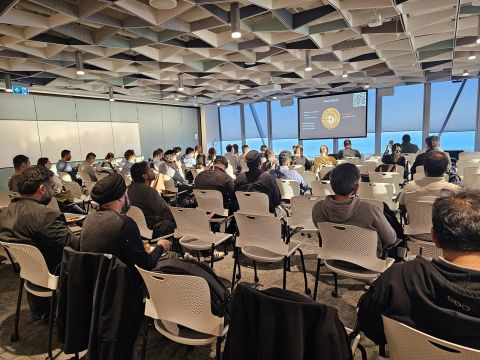
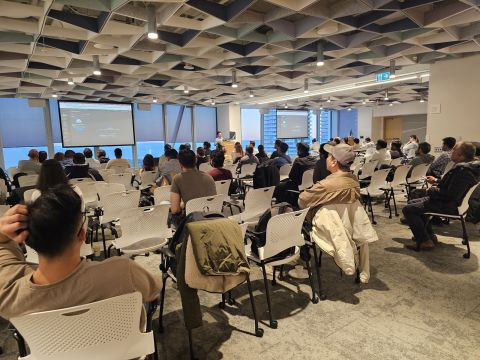
The October meetup brought together the cloud and AI community for an evening of technical learning, networking and practical discussion. Three sessions connected the infrastructure people use every day with the tools for building intelligent applications.
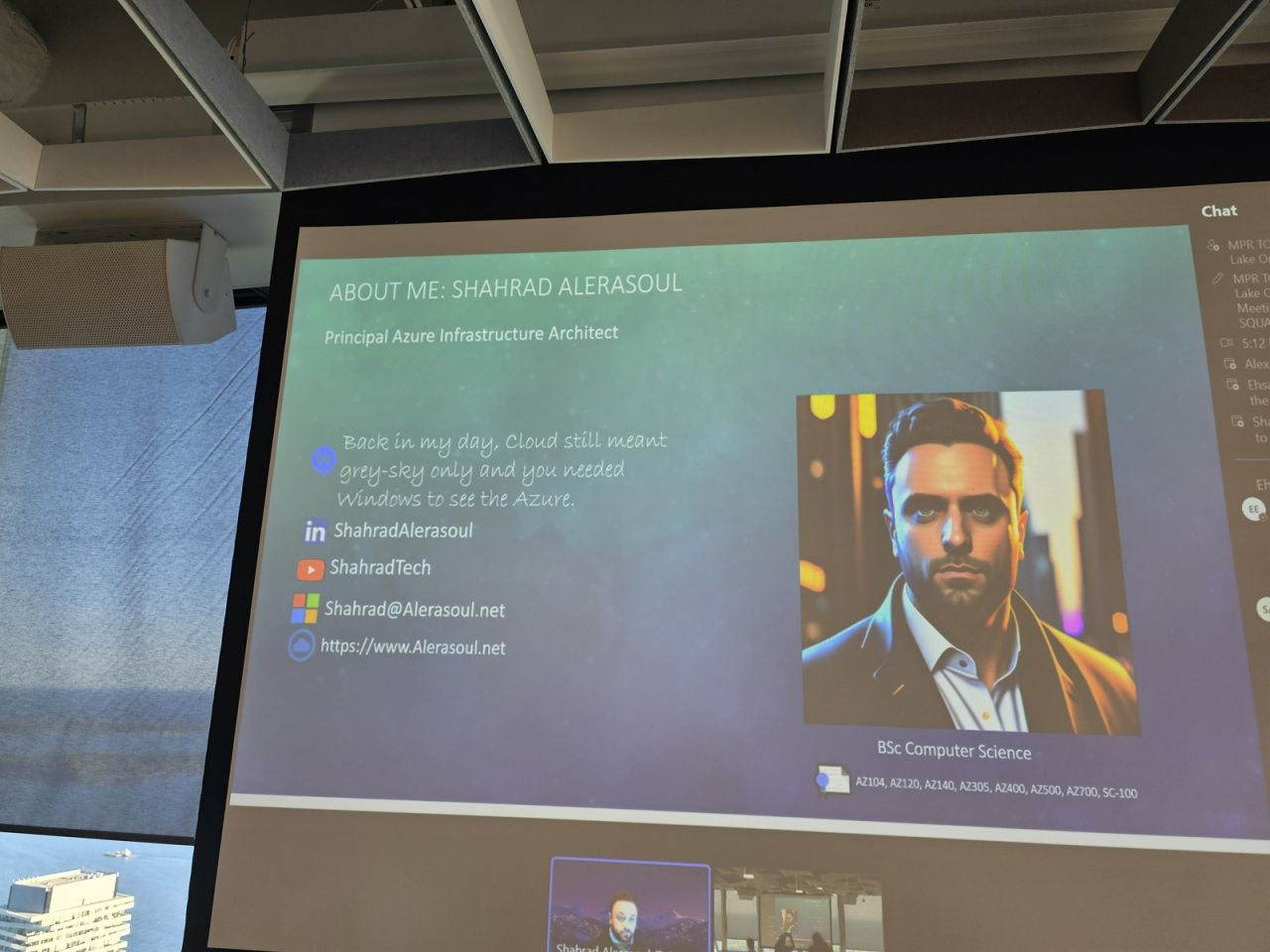
Shahrad Alerasoul: AVD and AI beyond proactive monitoring
Shahrad Alerasoul explored Azure Virtual Desktop and the role of AI in infrastructure operations. The session encouraged a broader view of monitoring: understanding the experience of the people using a service, alongside the health of its underlying resources.
My takeaway was to start with the operational question. If users report slow sessions, what evidence would help distinguish a capacity problem from an application or connectivity issue? A useful investigation should connect symptoms with relevant observations before proposing a change. For my own learning, I would begin with a small set of measurable indicators and compare them with the actual user experience.
AI assistance is most useful to me when it makes that evidence easier to interpret. I would still want a clear explanation of the proposed action and a way to check whether the change improved the service. These are my reflections on the session theme, rather than a transcript of the demonstration.
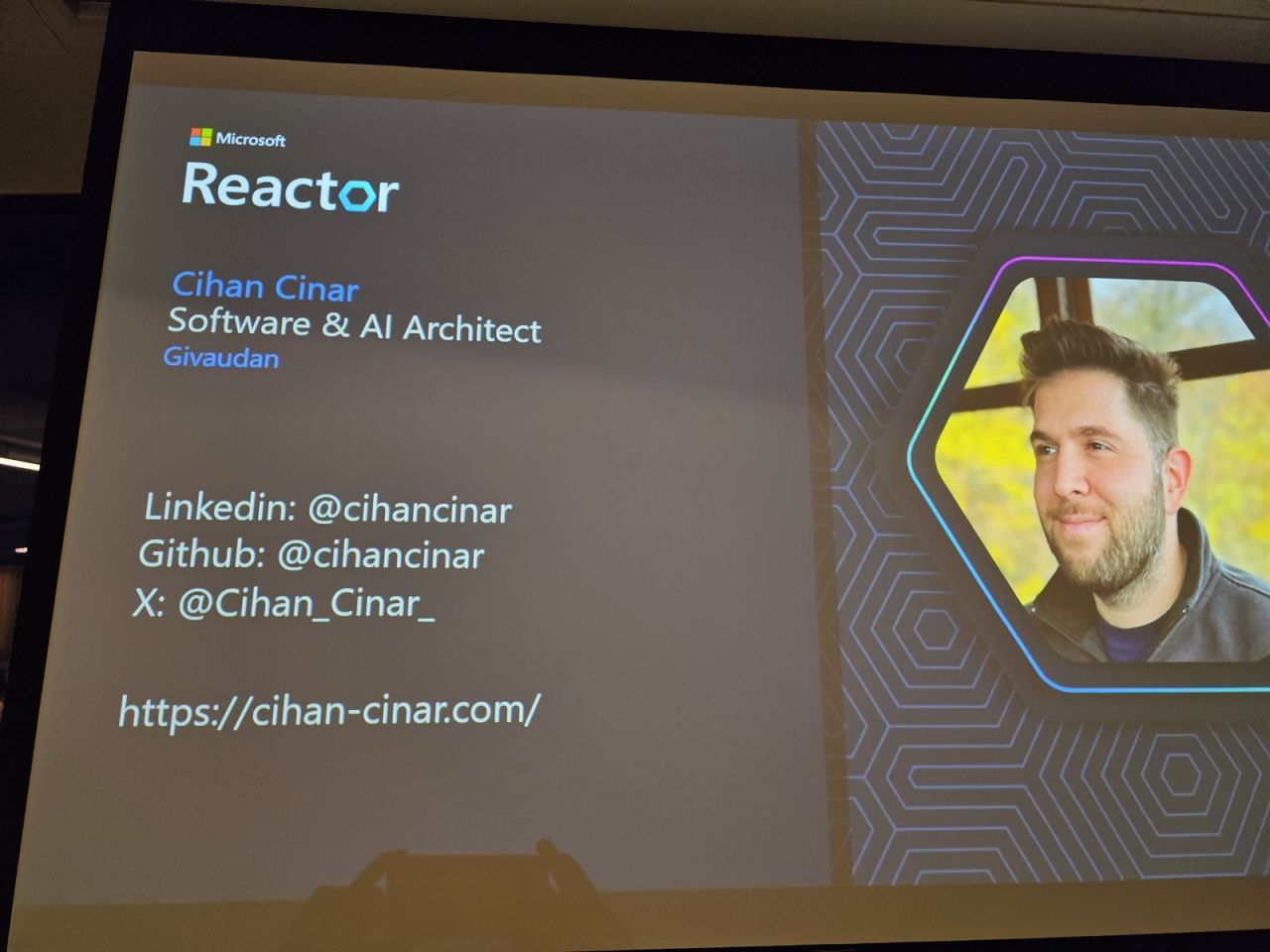
Cihan Cinar: building a RAG agent with Azure AI Search
Cihan Cinar delivered a hands-on session about Retrieval-Augmented Generation and Azure AI Search. The central idea is to give an assistant relevant information to work with when preparing a response.
For an analytics team, a useful learning example would be an assistant that helps people find metric definitions and reporting guidance. I would first identify the approved documents, then test whether a question retrieves the appropriate information before evaluating the answer itself. A fluent response is not enough if the supporting material is irrelevant or outdated.
The practical lesson I took away was to evaluate retrieval and response quality separately. I would check whether the system found the right source, whether the answer reflected it accurately and what happened when the required information was missing. Clear references and access boundaries would be part of that design from the beginning.
Kaan Turgut: getting started with Azure AI Foundry
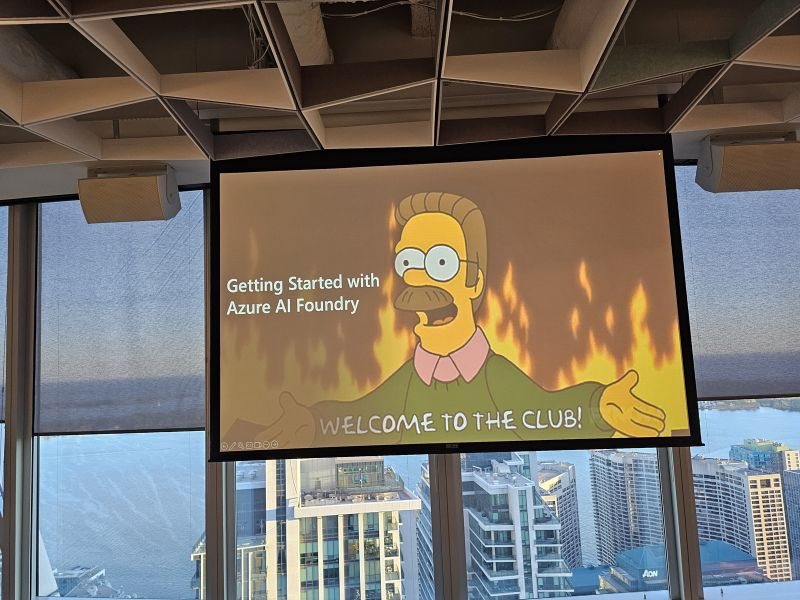
Kaan Turgut introduced Azure AI Foundry and the process of building and managing AI solutions, from prompt workflows to deployment. The session helped connect experimentation with the steps needed to make an application usable.
My starting point would be a narrow task with a result that can be checked. For example, an assistant could summarize a short operational report while preserving its reporting period and key numbers. I would try representative inputs, examine failures and repeat the same checks after changing the prompt or model.
The broader takeaway is to make evaluation part of development. A successful demonstration gives a useful starting point, while repeated checks reveal how the solution behaves with incomplete inputs, unfamiliar questions and changing information.
The community behind the evening
Thank you to Ehsan Eskandari, Microsoft MVP and organizer of the Metro Toronto Azure Community, and to Alex Drenea for the continued support.
A special thanks to Arash Danesh, Dev J. Shah, Zaheer Ahmed, Saeed Hosseinzadeh and Khalid Wasim for their work behind the scenes. Thank you to Microsoft for hosting, to the speakers for sharing their expertise and to everyone who contributed questions and conversations.
Read my original event post on LinkedIn ↗
Photos from the evening