Agentic DevOps, Browser Agents and Azure SRE in Toronto
Metro Toronto Azure Community · February 17, 2026 · Microsoft Canada HQ, Toronto
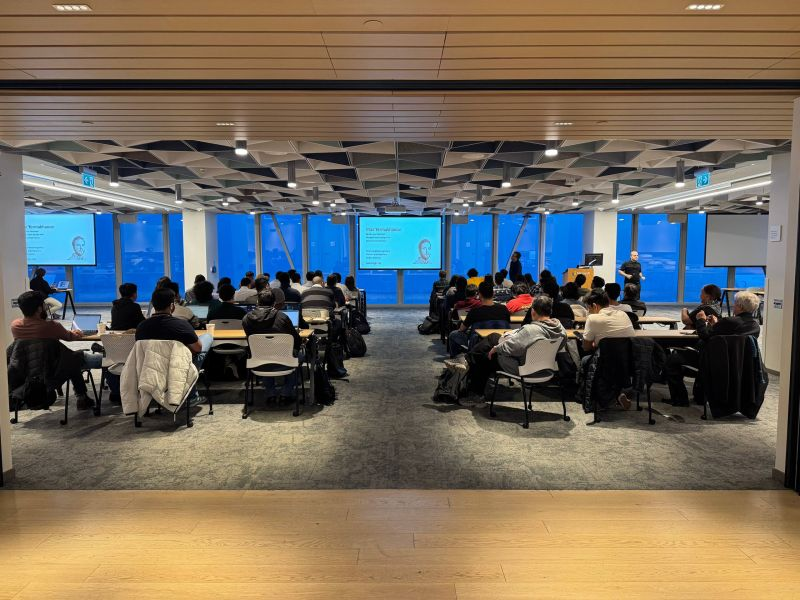
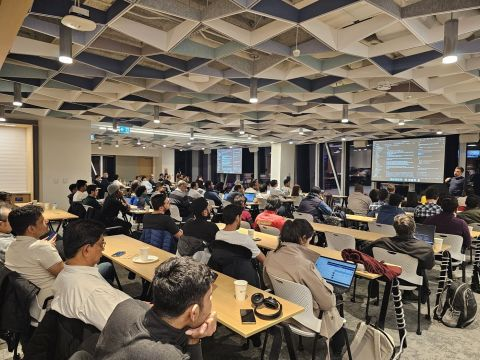
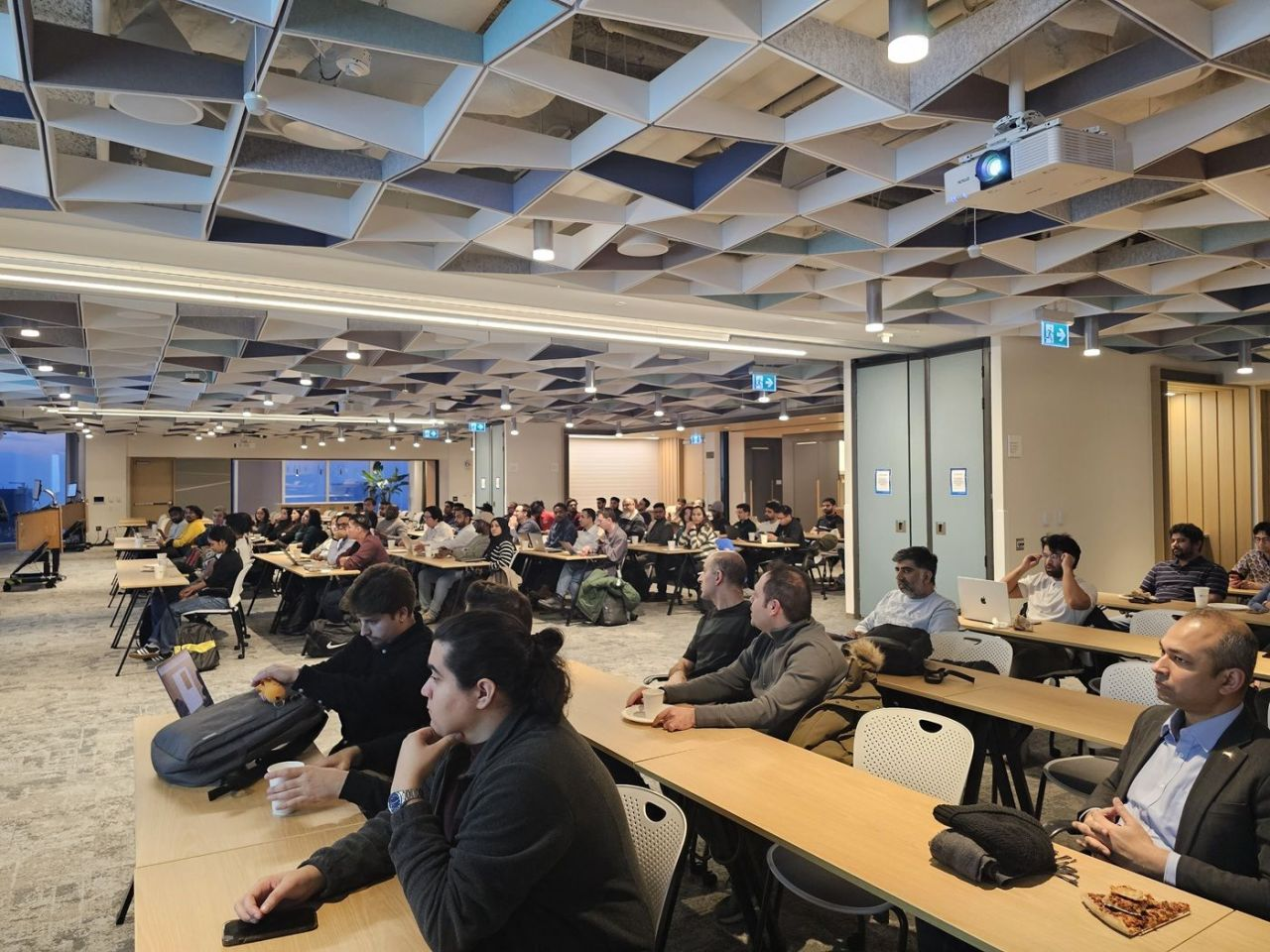
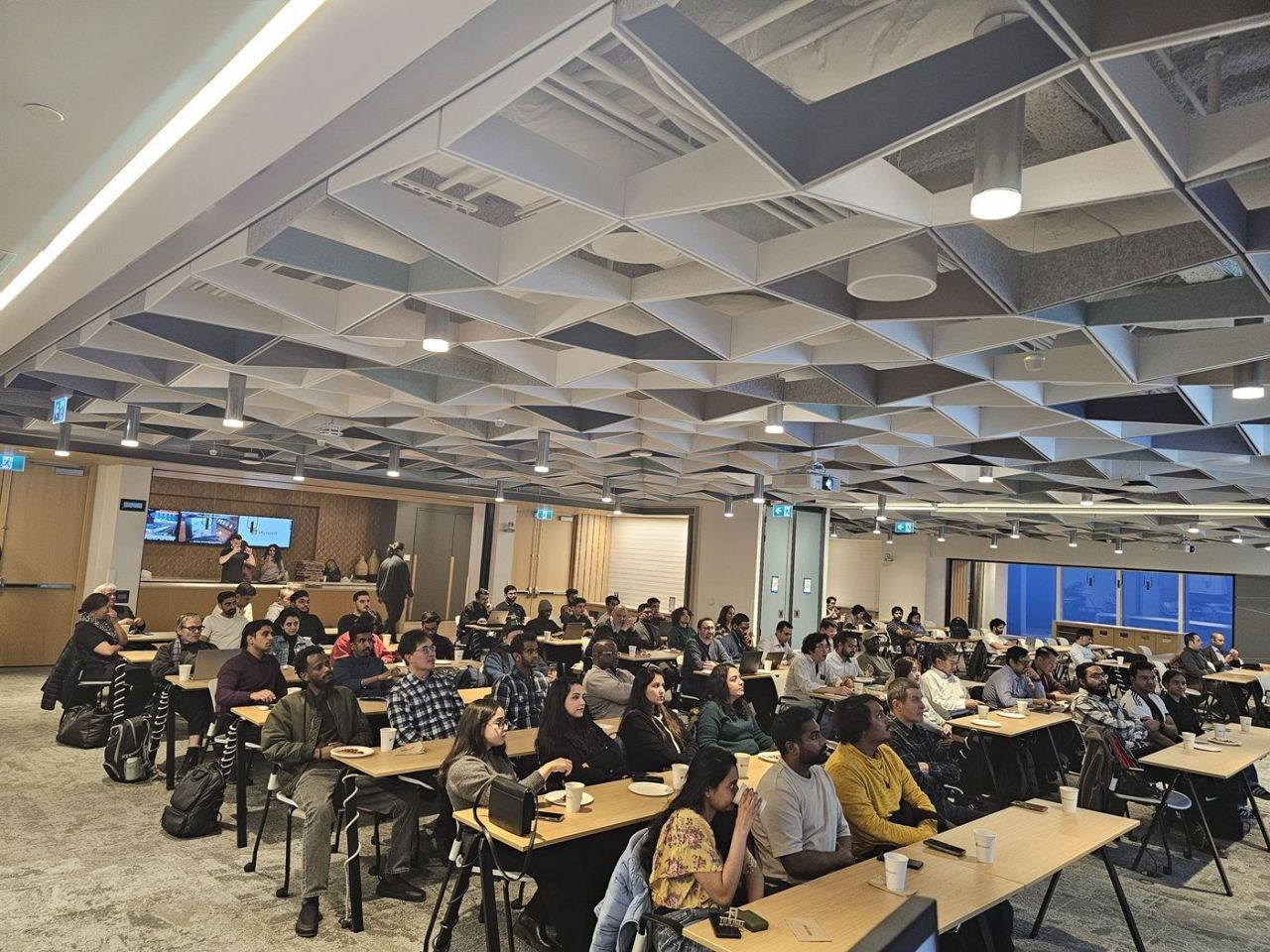
The February Metro Toronto Azure Community meetup brought developers, cloud professionals and data practitioners together at Microsoft Canada HQ. Three sessions connected AI-assisted software delivery, browser automation and operational reliability. The evening was a useful opportunity to consider how agents can support real engineering work while keeping their actions understandable and accountable.
The session summaries below follow my event recap. The learning examples expand on their themes, with links to technical documentation for further reading; they are not a transcript of the speakers’ demonstrations or a claim that every capability in today’s documentation was available at the time of the meetup.
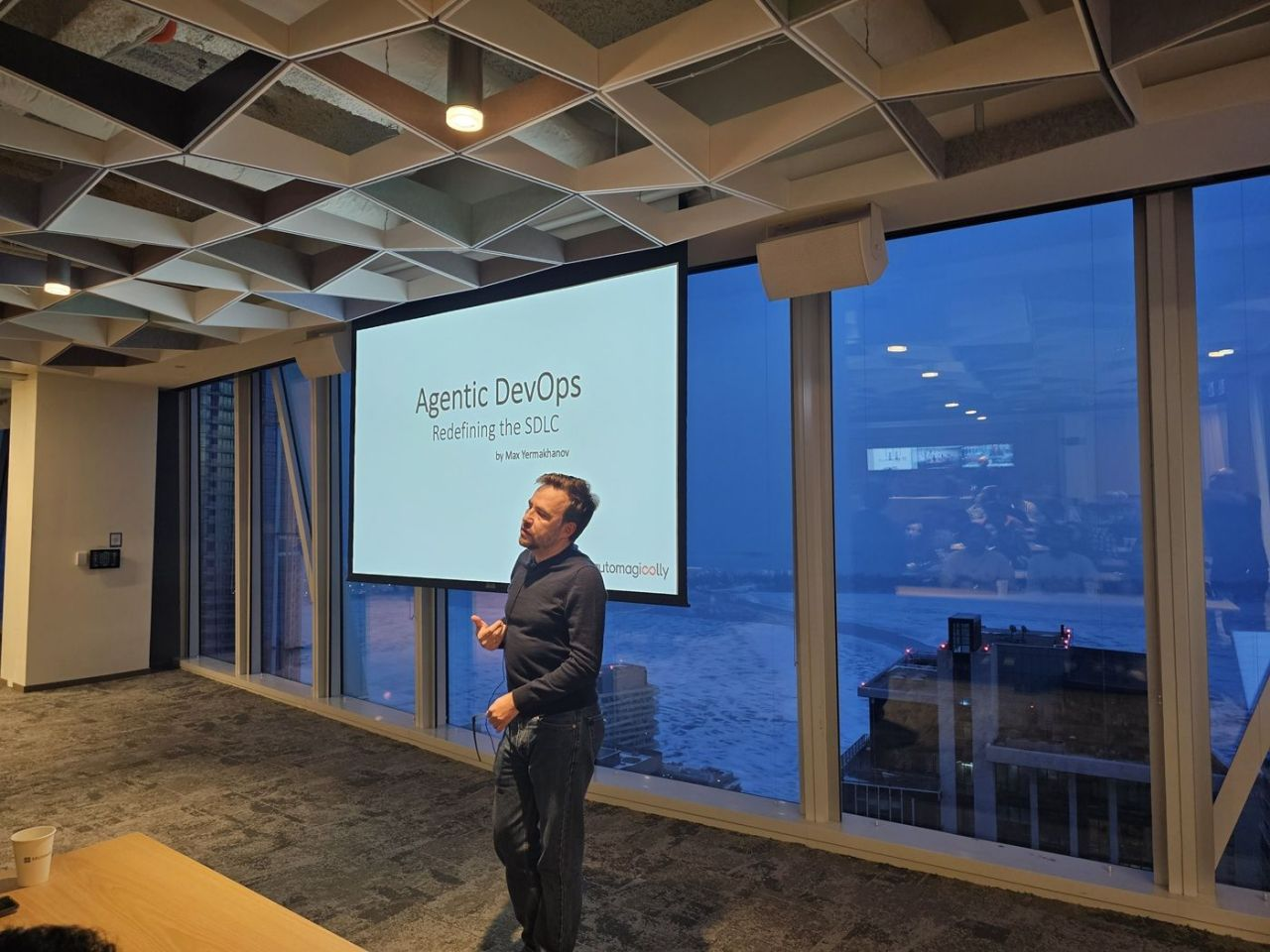
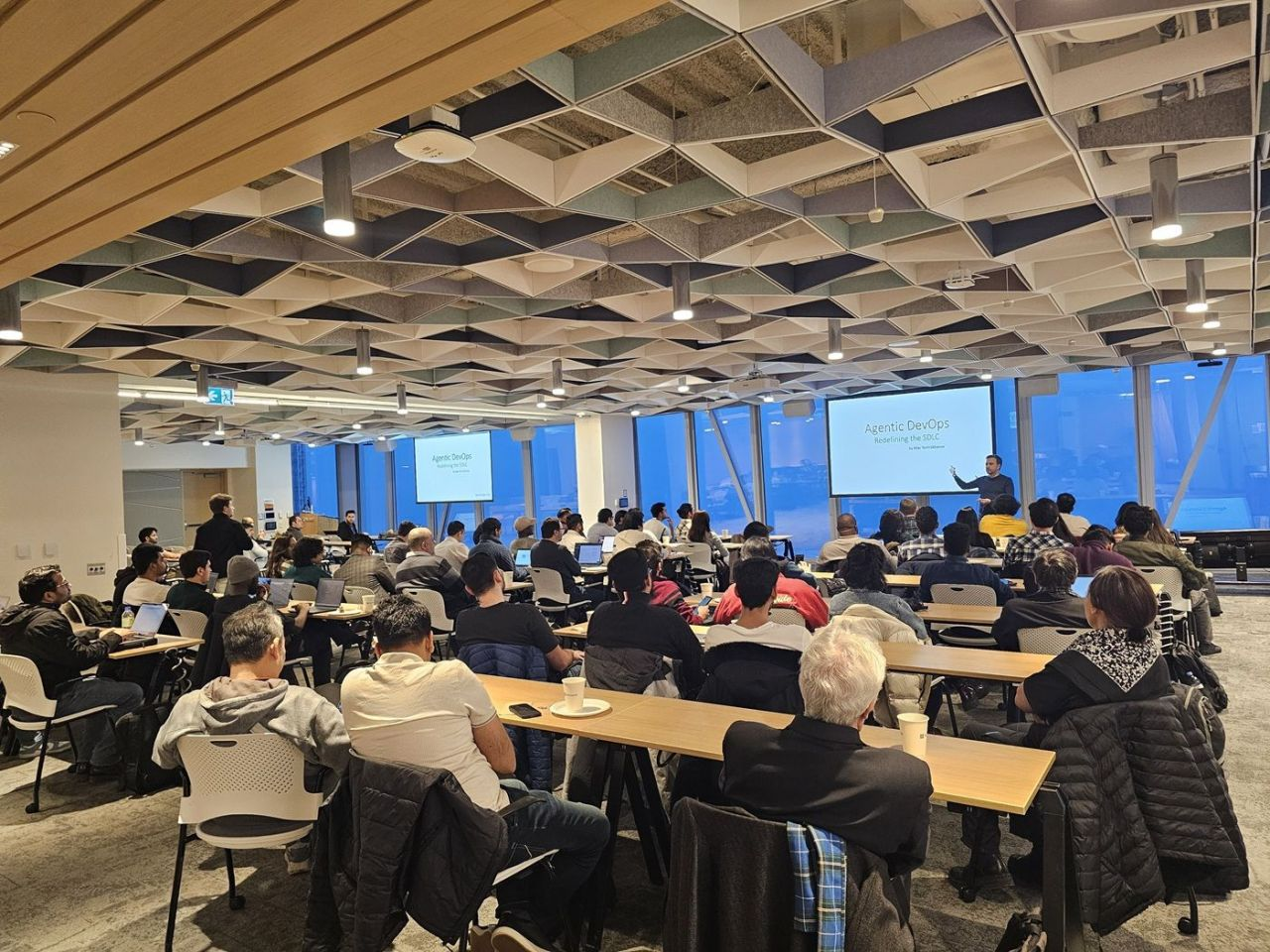
Max Yermakhanov on Agentic DevOps
Max Yermakhanov, Microsoft MVP, explored how Agentic DevOps can augment engineering teams across the software development lifecycle. His session focused on smarter pipelines, shorter feedback cycles and giving people more time for meaningful engineering work.
For someone approaching this topic for the first time, I would start with one familiar development task. Consider a data transformation that fails after a source schema changes. An assistant could help explain the failure, identify the affected code and propose a focused correction. The team would still need to check the business logic and verify that the change produces the expected data.
The useful question is how that assistance fits into the existing delivery process. I would keep the proposed change reviewable, run the relevant checks and compare the result with a known baseline. A faster draft is only one part of the outcome; the time spent reviewing and correcting it also matters. For my own projects, I would measure the whole journey from identifying the problem to accepting a verified fix.
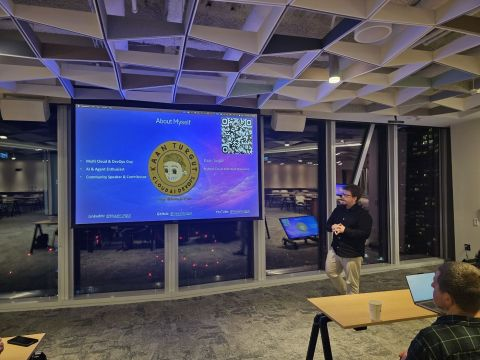
Kaan Turgut on secure browser agents
Kaan Turgut, Hybrid Cloud Solution Architect, explored building a browser agent with Microsoft AI Foundry and Azure Playwright Workspaces. The session brought together reasoning, interaction with web interfaces, output validation and the importance of clear operational boundaries. His session catalogue also records this February Toronto presentation.
Microsoft’s browser automation documentation explains the basic interaction loop: an agent receives a request, uses a browser tool to act, observes the updated page and continues toward the goal. This makes it possible to work with interfaces such as navigation, filters and forms, but the application still needs a way to determine whether the intended result was actually achieved.
A learning example I would use is finding a report on a test portal and checking its reporting period. The agent would need to inspect the current page, select the correct report and verify the displayed date. Clicking a button would be an intermediate action, not evidence that the task was complete. I would begin with read-only tasks, limited access and clear stopping conditions before considering workflows that submit or change information.
Transparency is equally useful when something goes wrong. A record of the pages visited, actions taken and results observed helps a developer distinguish a navigation problem from a misunderstanding of the task. That is the practical connection I see between browser automation and ordinary software testing.
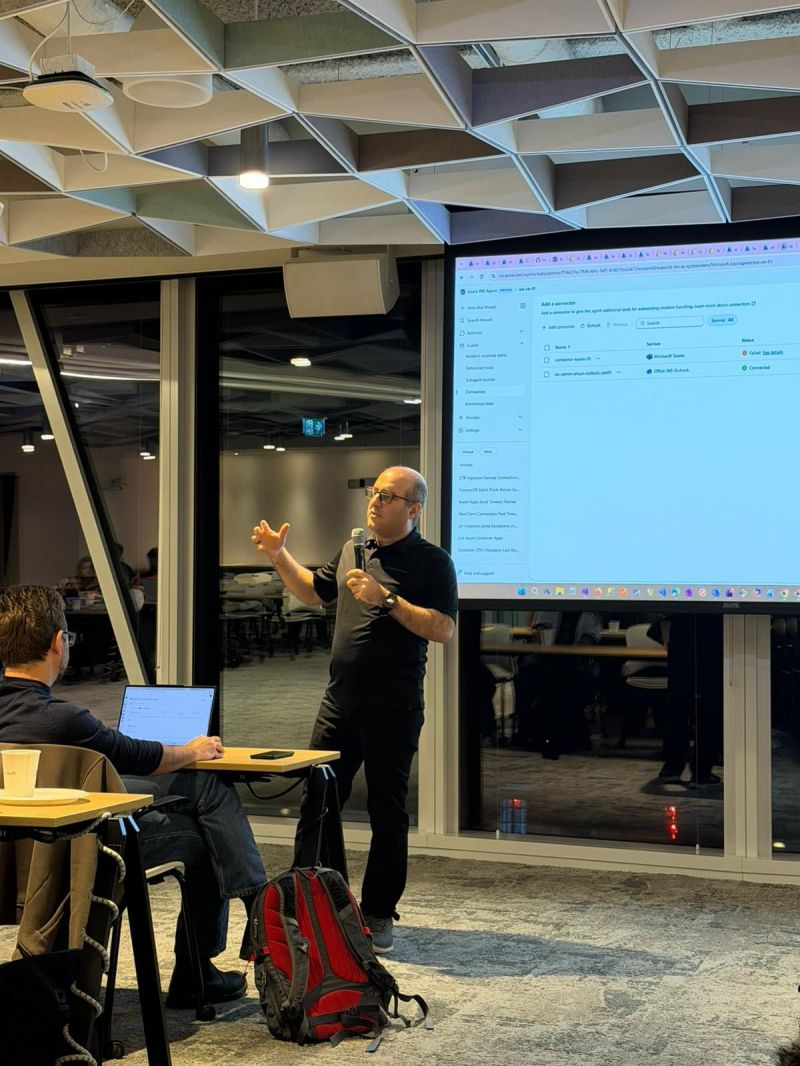
Ehsan Eskandari on Azure SRE Agent
Ehsan Eskandari, Microsoft MVP and organizer of the Metro Toronto Azure Community, introduced Azure SRE Agent and its role in cloud reliability. The session connected monitoring, diagnosis and remediation with the operational challenges of increasingly complex cloud environments.
Microsoft’s Azure SRE Agent overview describes how the service brings operational context together to investigate incidents, identify probable causes and propose or perform mitigations within configured permissions and controls. The distinction between investigation and action matters: identifying a likely cause does not automatically mean that a change should be applied.
For an illustrative incident, imagine a data-serving application becoming slower after a deployment. I would want to compare the timing of the deployment with error rates, response times and resource usage, then examine the evidence behind any proposed explanation. A useful investigation summary would state what changed, which observations support the hypothesis and what remains uncertain. Any mitigation should have a clear scope, an appropriate review step and a way to check whether service health improved afterward.
Shared lessons and community thanks
What connects these sessions for me is the need for short, observable feedback loops. Whether an agent proposes code, navigates a website or investigates an incident, the next step should be grounded in what actually happened. I would start with one bounded workflow, define success and review its results before expanding its responsibilities.
Thank you to Ehsan Eskandari for his leadership and continued commitment to this community, and to Microsoft for hosting the evening. My appreciation also goes to Luca Gobbi, Arash Danesh, Sidharth Warrier, Saeed Hosseinzadeh and Mandana Goudarzian for their work behind the scenes. Thank you to all three speakers and everyone who contributed thoughtful questions and conversations.
Read my original event post on LinkedIn ↗
Photos from the day